Field Biology Quarter

Field Biology Quarter (FBQ) is a unique capstone experience that has a profound effect on our student’s lives. It enhances their future career success, and affects them on a deeply personal level. 

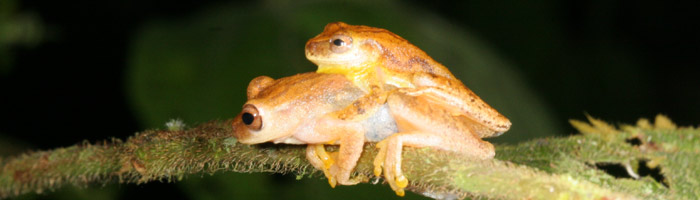
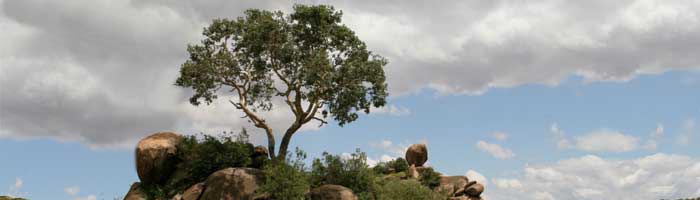
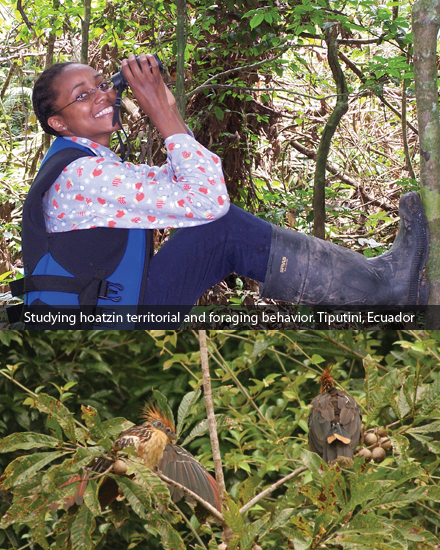
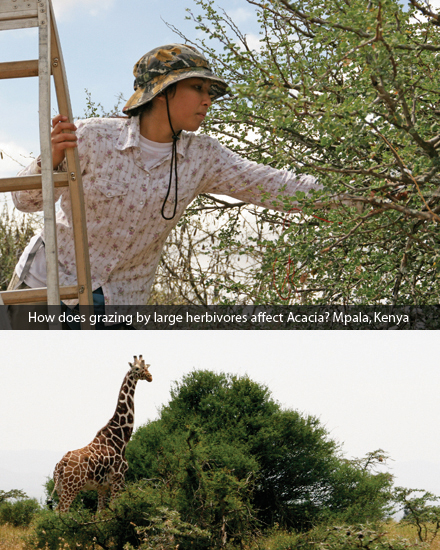
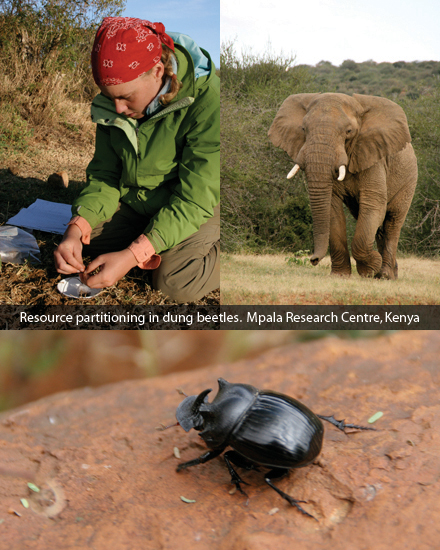
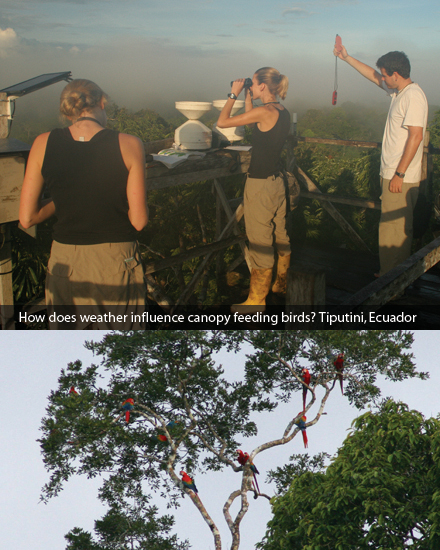
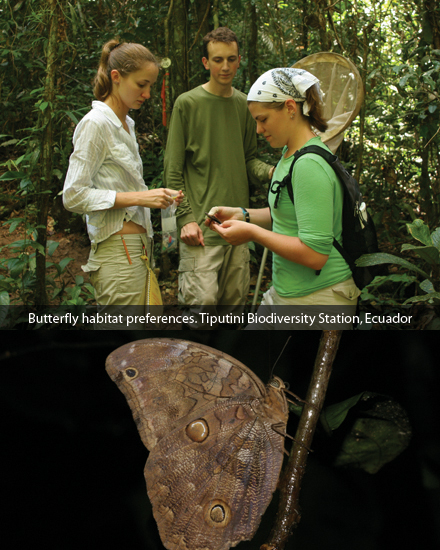
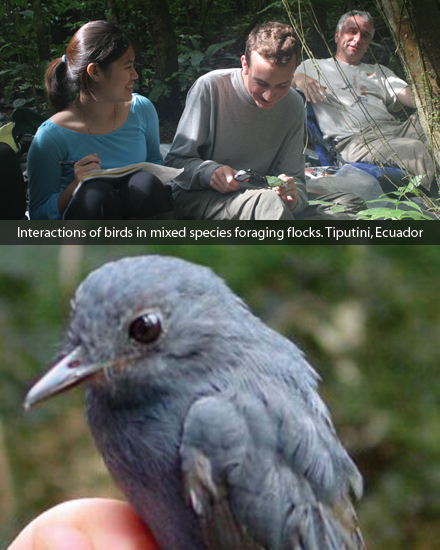
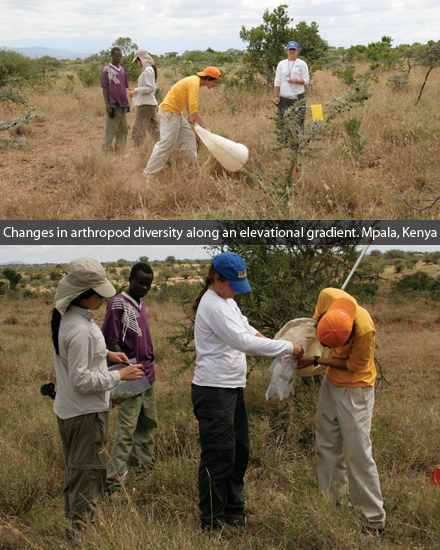
During FBQ our students spend a full quarter conducting field research. Courses are taught both locally, in the deserts, mountains and coastal areas of California, and internationally, including the savannas of Africa, rainforests of Ecuador, and coral reefs of Australia. International courses are especially transformative for students, many of whom have never been immersed in a foreign culture, or exposed to the tremendous diversity of a tropical rainforest. The experiences these students carry away from these courses profoundly affect how they view the world, its people, and its fragile biota. 

FBQ is unlike any other course the students have ever taken: it is an intense bout of learning that introduces students to the excitement of field-based research. Our professors strive to create an atmosphere in which students can learn to collaborate, help each other negotiate the challenges of research, and share in each other’s successes.  

FBQ Information:

  • Consists of 16 upper division units of coursework 
  • Minimum GPA of 3.0 or above recommended 
  • FBQ is a requirement for Ecology, Behavior, and Evolution B.S. 
  • Biology B.S. (admitted prior to Fall 2020): provides equivalency for 1 Category Three Laboratory course, 2 Category Four electives, and 1 Category Five elective.   
  • Marine Biology B.S. provides equivalency for the Marine Biology Quarter.  
  • All UCLA students are welcome to apply.

Prerequisites:

Prerequisites for the FBQ usually include of Life Sciences 7B, EE Biol 100, and Stats 13 (or its equivalent). 

Application Process:

Applications are available approximately one year in advance through the EEB Undergraduate Listserv and links on this page.  

Cost:

The typical cost of the FBQ includes normal UCLA tuition plus room and board at the same rate as UCLA dorms with a meal plan. Please contact the Financial Aid Office, to find out if your aid can cover these costs. Scholarship information is available at the Scholarship Resource Center. 

FBQ exemplifies what it should mean to be an undergraduate at one of the nation's top research universities.

Robert Walsh, Ecuador FBQ

...the FBQ was a period of personal growth for me. For me, it was the first time in a tropical rainforest without the luxuries of technology or heated water. I faced a lot of fears: my fear of insects in particular, of getting dirty, and of the dark. I came back to the U.S. with a sense of accomplishment and confidence, knowing that I had seen things that many people would never see in their lifetime.

Menemsha Alloush Nicaragua FBQ

Recent & Upcoming Field Biology Quarters

Professors: Greg Grether & Rachel Chock
Application Link: http://tinyurl.com/W25FBQ
 
Application deadline: Tuesday, February 27, 2024 at 11:59 PM.
General overview: The FBQ is a quarter-long, capstone program designed to give UCLA undergraduates experience with the entire process of doing biological field research.  Students typically design and carry out original research in the field for 3-5 weeks, under the guidance of two professors and two graduate student teaching assistants. After returning to UCLA, the students analyze their data, review the relevant literature, write journal article-style reports, and give informal seminar presentations.
Courses:
Field Behavioral Ecology (EE BIOL 132, 8 units)
Field Conservation Biology (EEB BIOL 151B, 8 units)

The FBQ satisfies the field quarter requirement for Ecology, Behavior, and Evolution (EBE) majors, counts as 4 major courses toward the Biology major, and fulfills 16 units of the Conservation Biology minor elective requirement. Qualified students in other departments are also welcome to apply.

Field site:  In winter 2025, we plan to return to Cocha Cashu Biological Station in Manú National Park, Peru. This is a very remote field station, deep in the Peruvian Amazon. It was established in 1969 and has been under the management of the San Diego Zoo since 2011. The site has incredible biological diversity, including 15 species of monkeys, 17 mammalian carnivores, over 500 species of birds, 82 species of amphibians, and over 1000 species of plants. The field station has rustic but well-designed infrastructure, with an extensive trail system, tent platforms, showers, dining facilities, library, water purification system, and satellite-based internet.
More information about the field site can be found at:
Required and recommended courses:  The only strict prerequisites are LS 7 and EE BIOL 100 (or equivalent courses), but preference is given to students who have taken college-level courses in math and statistics and relevant EE BIOL courses. The EE BIOL courses most directly relevant to this FBQ include 116 (Conservation Biology), 122 (Ecology), 129 (Animal Behavior), 151A (Tropical Ecology), and 161 (Plant Ecology).

Estimated cost:  In addition to UCLA registration fees and tuition, there is a mandatory student contribution to defray costs associated with the FBQ trip. Students who are invited to enroll will be asked to make a deposit to secure their position. The amount of the student contribution remains to be determined but is expected to be in the range of $2300 to $3000. Airfare and other travel expenses are included in the student contribution. Students are also required to bring specific personal items on the trip for their own health and safety (e.g., prescription antibiotics, rubber boots, compass, flashlight), as well as a valid passport and documentation of the required vaccinations. Detailed packing and vaccination lists will be provided. Students who qualify can include FBQ expenses in their federal financial aid application (FAFSA).

Professors: Elsa Ordway and Felipe Zapata

Application Linkhttp://tinyurl.com/SP25FBQ

General Overview: In the second iteration of this local Field Biology Quarter (FBQ), students will be introduced to doing field biology in a rapidly changing urban environment and biodiversity hotspot, the city of Los Angeles. The course will cover the fundamentals of experimental design and will emphasize the seemingly simple, yet critically important skill of observing nature, formulating research questions, collecting data, analyzing data, and communicating findings, all in one of the most exotic and exciting “biomes” of the Anthropocene. A central theme of this FBQ is to reflect on the role of humans as ecosystem engineers and the effects of our actions on the local environment as well as the other organisms that inhabit it.

Field Site: Students will explore different field sites across the city and will learn about the flora and fauna of urban LA. Because the course will be completely based in LA, students will not need to travel or spend the night in remote locations for the duration of the quarter. However, we will likely spend 1-2 nights together either camping or at a research station as part of a retreat at the beginning and end of the course.

Courses: The FBQ satisfies the field quarter requirement for Ecology, Behavior, and Evolution (EBE) majors, counts as 4 major courses for the Biology major, and fulfills 16 units of the Conservation Biology minor elective requirement. Qualified students in other majors and departments are also welcome to apply.

Prerequisites and Recommended Courses: Life Sciences 7, EE Biol 100, or an equivalent course in animal ecology and behavior.
We also recommend that applicants take (1) one year of math and physics; (2) a course in statistics; and (3) one or more of the following EE Biol courses: 103 (Plant Diversity and Evolution), 114 (Ornithology), 115 (Mammalogy), 116 (Conservation Biology), 120 (Evolution), 122 (Ecology), 128 (Plant Physiological Ecology), 129 (Animal Behavior), 136 (Ecological Restoration), 151A (Tropical Ecology), 160 (Intro to Plant Biology), 161 (Plant Ecology), and 162 (Plant Physiology).
Estimated Cost: All qualified students are encouraged to apply. In addition to University registration fees and tuition, there may be some additional costs associated with the course, but we hope to keep these minimal. Students who qualify for financial aid may be able to apply for and earn subsidies and scholarships (inquire in the EEB Undergrad Office).
EXTENDED APPLICATION DEADLINE: March 18, 2024 at 4:00 PM

WINTER QUARTER 2027 – TROPICAL RAINFOREST
 
(if clicking the link doesn’t work, copy and paste it into a browser)
Application deadline:  Monday, February 23, 2026 at 11:59 PM

Professors:  Greg Grether & Debra Shier

Courses:
Field Behavioral Ecology (EE BIOL 132, 8 units)
Field Conservation Biology (EEB BIOL 151B, 8 units)

The FBQ satisfies the field quarter requirement for Ecology, Behavior, and Evolution (EBE) majors, counts as 4 major courses toward the Biology major, and fulfills 16 units of the Conservation Biology minor elective requirement. Qualified students in other departments are also welcome to apply.

General overview:  The FBQ is a quarter-long, capstone program designed to give UCLA undergraduates experience with the entire process of doing biological field research. Students design and carry out original research in the field for 3-4 weeks, under the guidance of two professors and two graduate student teaching assistants. After returning to UCLA, students analyze their data, review the relevant literature, write journal article-style reports, and give informal seminar presentations. The FBQ satisfies the field quarter requirement for Ecology, Behavior, and Evolution (EBE) majors, counts as 4 major courses toward the Biology major, and fulfills 16 units of the Conservation Biology minor elective requirement. Qualified students in other departments are also welcome to apply.

Field site:  In winter 2027, we plan to return to Cocha Cashu Biological Station in Manú National Park, Peru. This is a very remote field station, deep in the Peruvian Amazon. It was established in 1969 and has been under the management of San Diego Zoo Wildlife Alliance since 2011. The site has incredible biological diversity, including 15 species of monkeys, 17 mammalian carnivores, over 500 species of birds, 82 species of amphibians, and well over 1000 species of plants. The field station has rustic but well-designed infrastructure including an extensive trail system, tent platforms, showers, dining facilities, library, water purification system, and satellite-based internet. More info can be found at:  https://cochacashu.sandiegozooglobal.org/

Required and recommended courses:  The only prerequisites are LS 7 and EE BIOL 100 (or equivalent courses) but preference is given to students who have taken college-level courses in math and statistics and relevant EE BIOL courses. The EE BIOL courses most directly relevant to this FBQ include 116 (Conservation Biology), 122 (Ecology), 129 (Animal Behavior), 151A (Tropical Ecology), and 161 (Plant Ecology).

Estimated cost:  In addition to regular UCLA registration fees and tuition, there is a mandatory student contribution to defray costs associated with the FBQ trip. Students who are invited to enroll may be asked to make a deposit to secure their position. The amount of the student contribution remains to be determined but is expected to be in the range of $2300 to $3000. Airfare and other travel expenses are included in the student contribution. Students are also required to bring specific personal items on the trip for their own health and safety (e.g., prescription antibiotics, rubber boots, compass, flashlight), as well as a valid passport and documentation of the required vaccinations. Detailed packing and vaccination lists will be provided. Students who qualify for financial aid may be able to apply for and earn subsidies and scholarships (inquire in the EEB Undergrad Office).

Some past FBQ destinations

  • Fowlers Gap research station in New South Wales, Australia
  • University of California Bodega Marine Laboratory, Bodega Bay, California
  • Sonoran Desert and the Sierra Nevada Aquatic Research Lab
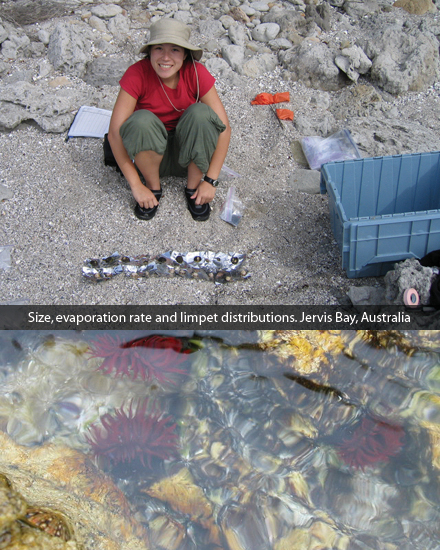
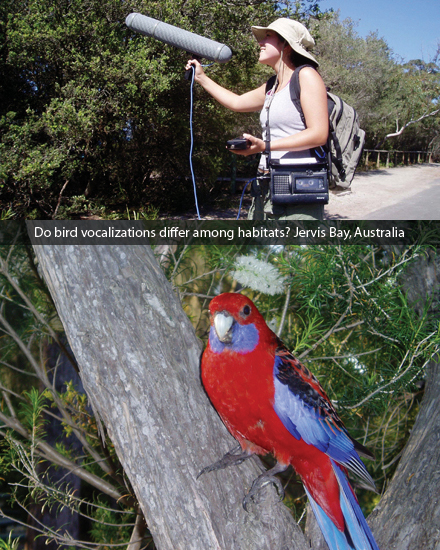
  • Jervis Bay, Australia
  • Santa Cruz Island/Granite Mountains
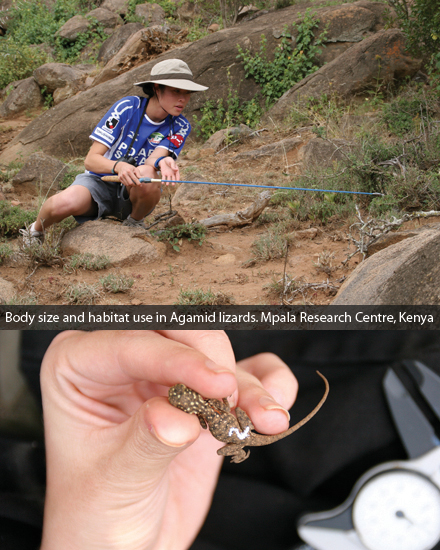
  • Mpala Research Centre Ranch and Conservancy, Kenya
  • Mojave Desert / Nicaragua
  • Granite Mountains/Santa Cruz Island
  • Lameshur Bay, St John US Virgin Islands
  • Neotropical Rainforest – Central or South America
  • Lameshur Bay, St. John US Virgin Islands
  • Kibale, Uganda
  • Refugio Bartola, Nicaragua
  • Local – James Reserve in the San Jacinto Mountains and Santa Cruz Island
  • University of Belize – Calabash Caye Field/Marine Station
  • African Rainforest
  • Wrigley Marine Science Center – Catalina Island
  • Moorea, French Polynesia – UC Gump Field Station
  • Lowland Caribbean Rainforest, Nicaragua
  • Queensland, Australia
  • California Research Locations
  • Cocha Cashu Biological Station, Manú National Park, Peru
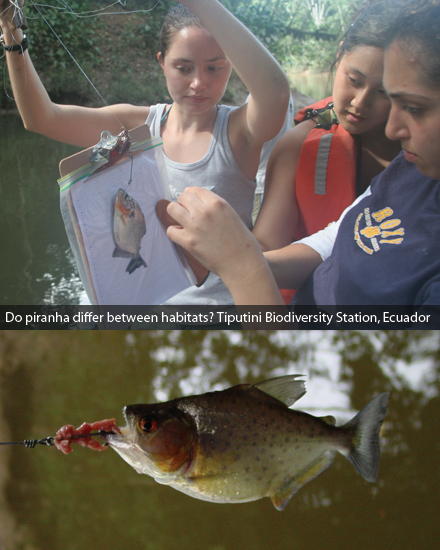
  • Tiputini Biodiversity Station, Ecuador
  • Valentine Eastern Sierra Reserve