
Welcome to the Blumstein Lab

The evolution of behavior and the integration of behavior and conservation biology

The evolution of communication and social behavior in marmots
Comparative studies of the evolution of behavior

The evolution of group-size effects

The evolutionary persistence of behavior
Behavior and conservation
Reducing the impact of ecotourism
Developing tools to quantify behavior

Who we are

Dan's cv, publications

Interested in being a Ph.D. student in the lab?

Information for prospective volunteers

Current Projects

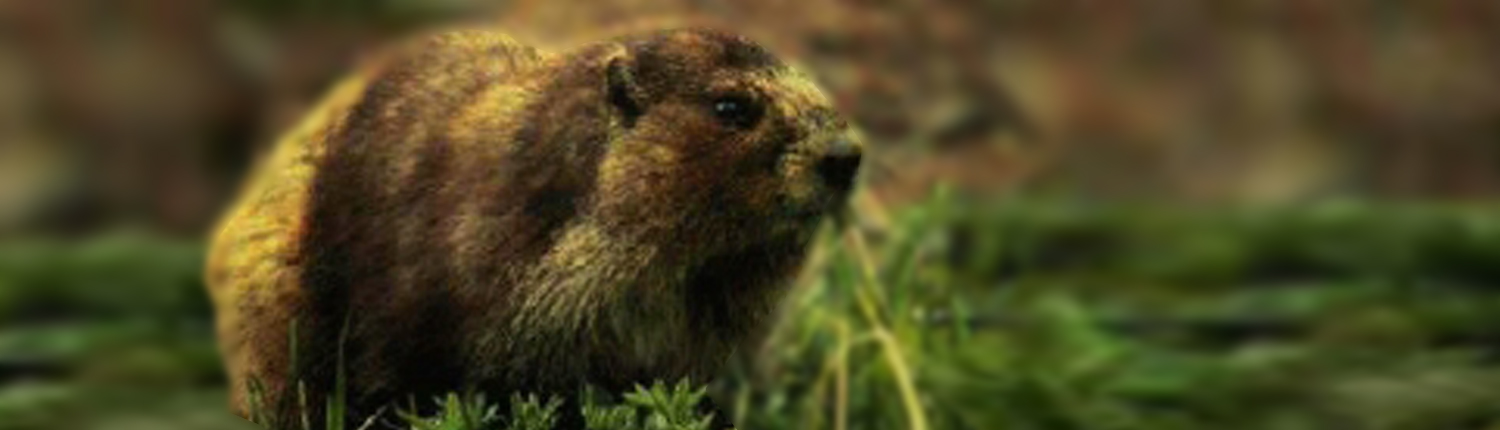
The 14 species of marmots make an ideal experimental system to ask questions about the evolution of social behavior and communication because they live in a variety of habitats, exhibit a range of social systems, and all species emit between one and five types of alarm calls. Past studies have focused on the meaning of these calls. Current work focuses on yellow-bellied marmots at the Rocky Mountain Biological Laboratory in Colorado to better understand the evolution of alarm calling and social variation, as well as how alpine animals respond to climate change. The behavior and population biology of the marmots of RMBL have been continuously studied since 1962. Exciting new research directions focus on understanding reproductive suppression in females, coalitionary alliances in males, the consequences of social relationships, and the importance of 'stress' in reproduction and health.

Participants: Dan Blumstein, Janice Daniel, Lucretia Olson, Tina Wey
Collaborators: Ken Armitage (University of Kansas), Andrew Bryant (Vancouver Island Marmot Recovery Project), Ferenc Jordán (Institute of Advanced Studies, Budapest), Alexander Nikol'skii (Russian People's Friendship University), Madan Oli (University of Florida), Arpat Ozgul (University of Florida), Lynn Patton, Wendy Saltzman (UC Riverside), Dirk Van Vuren (UC Davis)
Links: The Marmot Burrow
Popular Press: Science News, Los Angeles Times
, Audubon Magazine , The Rocky Mountain News, The Aspen Daily News, also see the special featurette about studying marmots included with the 15th Anniversary Edition release of the film Groundhog Day.


voxnet.jpg

We are building tools to inventory animals by detecting, recording, and analyzing their sounds.  Among other functions, this will enable behavioral ecologists to study the temporal and spatial dynamics of acoustic communication, and conservation biologists and wildlife managers to acoustically census animals.  While there has been the development of “proof-of-concept” tools and algorithms for many of the components of a usable system, there is no reliable, robust, and easy-to-use system that will permit field biologists to easily census acoustic animals.  With NSF support, we are developing VoxNet:  an integrated software and hardware package which will be a quantum leap forward beyond existing technology in four main areas:  software, near-real time event recognition, energy efficiency, and a much longer communication range.


ParticipantsDan Blumstein
CollaboratorsCharles Taylor and Kung Yao (UCLA), Lewis Girod and Samual Madden (MIT), and Ying Lin (University of Arizona). 

Recent advances in comparative methods have led to a renaissance in the study of the evolution of behavior. Past studies have focused on the evolution of social and communicative behavior in ground-dwelling sciurid rodents, and the evolution of infanticide in rodents. Current work focuses on the evolution of communication and social behavior in birds and mammals and on factors that influence longevity in birds.

Participants: Dan Blumstein, Kim Pollard, Lucretia Olson
Collaborators: Luis Ebensperger (Universidad Católica de Chile), Mike Mooring (Point Loma Nazarene University), Theo Manno & F. Stephen Dobson (Auburn), Anders Møller (Université Pierre et Marie Curie)

Many birds and mammals vary the amount of time allocated to the mutually-exclusive activities of foraging and antipredator vigilance as a function of the number of adjacent conspecifics. This fundamental tradeoff has important consequences for the evolution of sociality but could result from two very different pathways: feeding competition, or a reduction in the risk of predation. Current and future experimental and comparative work seeks to understand the evolution of so called 'group-size effects'.

Participants: Dan Blumstein, Janice Daniel

Popular Press: Ecos Magazine

Many species are isolated from the predators with which they evolved. Remarkably, we know little about how long presumably adaptive antipredator behavior persists in a species' behavioral repertoire once selection is relaxed for antipredator behavior. Previous work focused on kangaroos and wallabies that are either found with predators, or have been isolated from them for 30 to 9,500 years. The goal was to understand how long antipredator behaviors of different degrees of sophistication persist under relaxed selection. An exiciting dimension of this research created virtual worlds where we studied relaxed selection for antipredator behavior. New work focuses on marmots and the degree to which predator discrimination abilities persist for extinct predators.

Participants: Dan Blumstein, Janice Daniel
Collaborators: Avi Bitton (UCLA Computer Science) and Jose Fernandes (UCLA Department of Architecture and Urban Design)

Knowledge of animal behavior can help us conserve and manage endangered species. A common management intervention to recover a locally extinct population is captive breeding followed by reintroduction. Sadly, most of these reintroductions fail, and predation is often implicated as the cause of failure. Previous work focuses on detailed studies of predator recognition abilities in kangaroos and wallabies as well as the critically-endangered Vancovuer Island marmot, combined with studies that focus on specifically what is learnt when animals are trained to recognize predators. Work sought to understand the degree to which kangaroos and wallabies benefited from living socially. Even relatively non-social species may benefit from aggregation.

Participants: Dan Blumstein
Collaborators: Andrew Byrant, Berna-Dean Holland

Popular Press: Science News, Nature, Nature Science Update, NatureAustralia

Ecotourism is the fastest growing part of the world's largest industry, tourism. Yet, in order for ecotourism to be sustainable, we must know much more about how non-humans perceive the myriad of impacts associated with tourism so that they can be minimized. Unfortunately, most studies focus on a single species and there is no theory managers can use to predict how a particular species might react to, say, the construction of a hiking trail. Current and future work aims to develop predictive models about how species react to human impacts based on an understanding of life-histories and evolutionary "experiences". in addition, Esteban and I are writing "A Primer of Conservation Behavior" for Sinnauer.

Participants: Dan Blumstein
Collaborators: Esteban Fernández-Juricic (California State University, Long Beach), Ted Stankowich (UMass), and Pat Zollner (Purdue)

Popular Press: El Colombiano

JWatcher.gifJWatcherCoverThumb To study behavior one must often quantify it. With NIH support, we developed, and freely distribute, a new and powerful event-recorder and analysis package. It is written in the Java(TM) computer language so that works on virtually any modern microcomputer. Sinauer has published the JWatcher book--Quantifying Behavior the JWatcher Way.

Participants: Dan Blumstein, Janice Daniel
Collaborator: Chris Evans (Macquarie University), Jose & Nada daVeiga (Convolution)
Links: JWatcher web site. Book reviews: Integrative and Comparative Biology, Quarterly Review of Biology.


Back to: The Department of Ecology and Evolutionary Biology, UCLA
Back to: Animal Behavior @ UCLA

Last updated: 27 April 08